
Sebastian Brant’s The Ship of Fools
Somnath Basu
Yes, I’m the first one here you see.
“Of Useless Books”, 62
Because I like my library.
Of splendid books I own no end,
But few I can comprehend
Delightfully quirky and satirical, The Ship of Fools, a compilation of poems by the German humanist Sebastian Brant was publishedin 1494 from Basel. In it, Brant claimed to have documented the many kinds of madness or “foolishness” found among the men and women of his time. Taking inspiration from Plato’s description of a “ship of fools” in Book 6 of The Republic and the subsequent Stultifera Navis /Narrenschiff tradition of the medieval period, Brant presents us a catalogue of the various kinds of foolishness under the patronage of the imaginary Saint Grobian—ā figure created by Brant as a satirical take on the Christian assumption that there had to be a patron saint for everything.
There are 112 poems in the core text along with a prologue by the author. Approximately 100 woodcuts (as some were repeated) prefacing each poem. Each poem contains an epigraph. The lengths of the poems are not equal—some run to a page and a half, while the longest ones exceed five pages.
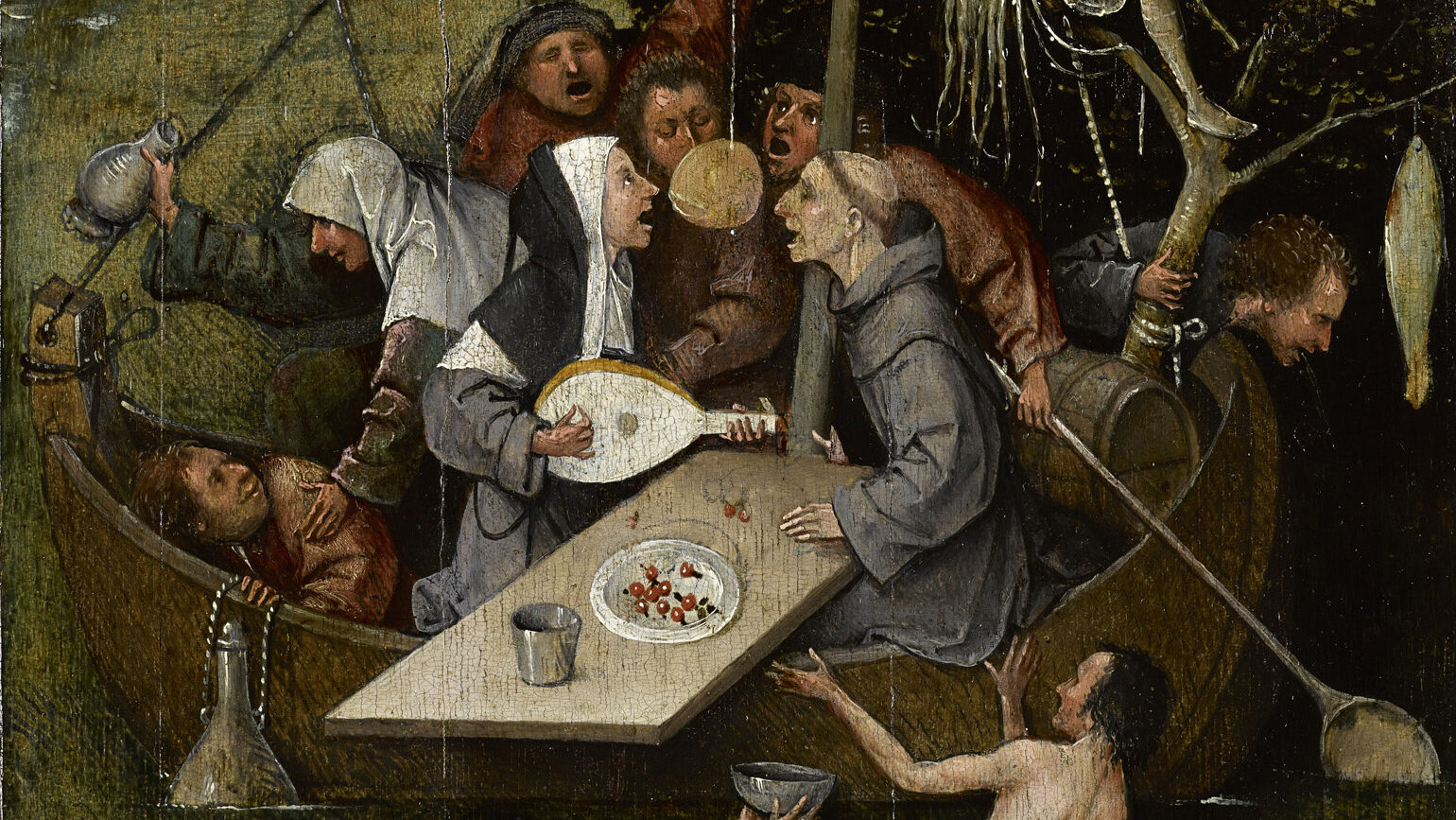
The text was extremely popular, going through multiple editions, and in all probability inspiring works like Hieronymus Bosch’s painting, “The Ship of Fools”, painted between 1490 and 1500. The Ship of Fools was translated into Latin, French, and English by 1498, which were also reprinted multiple times in later centuries. It remains the most popular treatment of the “ship of fools” motif, and still continues to inspire debate among scholars over 500 years after it was published.
Brant uses the poems to criticize both practices and beliefs. He believed that the Roman church had become corrupted, but, unlike Martin Luther and later Protestant reformers, he wanted reform of the Church to take place internally. This makes The Ship of Fools remarkable in the sense that Brant’s poems directly castigate religious abuses perpetrated by corrupt religious figures while remaining within the church. Take, for instance: Poem 30: “Of Too Many Benefices”, which contains this epigraph:
If many a benefice you’d share
Your ass will fall more oft than fare
An ass can die from heavy ware.
(“Of Too Many Benefices”, 130)
This highlights the idea that a single priest must not hold multiple benefices as he will ignore most or all of them, bothering only about the income that they will bring him. This is a repetition of a complaint that had been in circulation for several centuries all across Europe. Brant declares that this decline in faith cuts across all classes, though (“Of prince and lord, of city, land,” 315) and:
No wonder then the tears do stand
In these mine eyes and flow so free
That one should see, disgracefully
The faith of Christians, ebb, recede. (315–16)
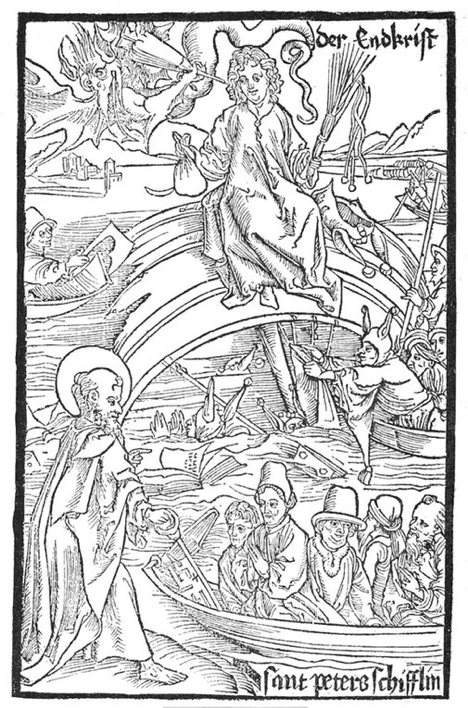
Poems 102 to 107 amplify this theme, explaining how the various kinds of fools depicted there become beholden to the Antichrist and are ultimately led to their doom through their actions.
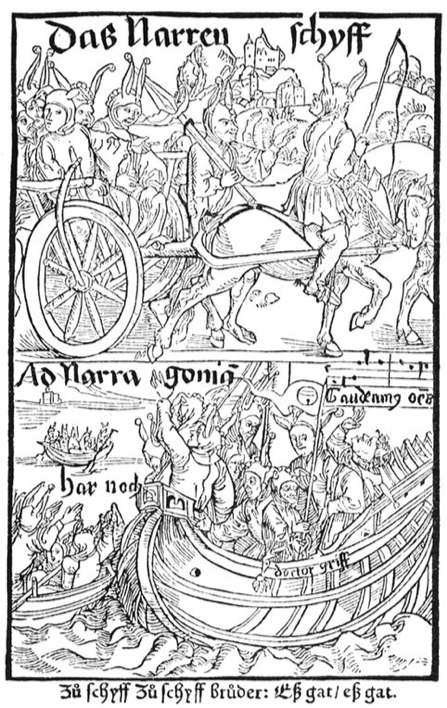
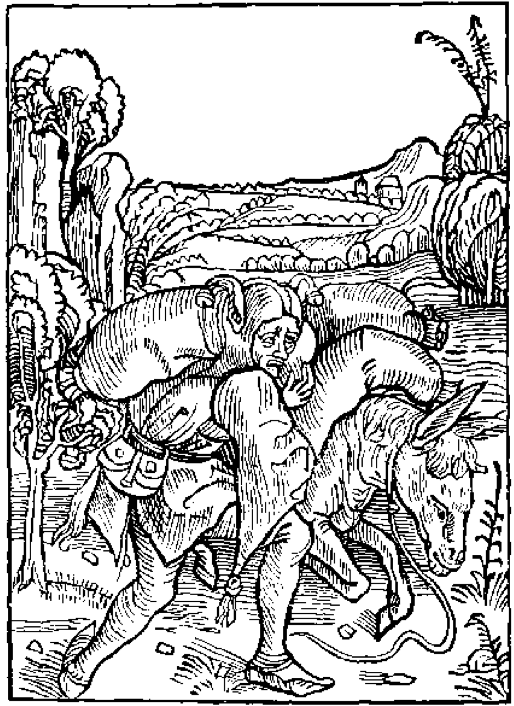
Woodcut, Poem 30, “Of Too Many Benefices” (1494)
Another first for The Ship of Fools is its references to the first voyage of Columbus—in fact, this may be the first printed text that explicitly refers to Columbus’s voyage. Poem 66, “Of Experience of All Lands”, that states:
They’ve found in Portugal since then
And in Hispania naked men,
And sparkling gold and islands too
Whereof no mortal ever knew.
(“Of Experience of All Lands”, 222)
Possibly inspired by these voyages, Brant charts one of his own, mentioning the utopian land of Schlaraffa, a “land of milk and honey and the paradise for indolent carousers and gluttons” (Chapter 103, Note 8, 388). This voyage, described in painstaking detail in Poem 108 of the series, is often considered to be the high point of the The Ship of Fools (see, for e.g., Skrine). However, the voyage from there turns into a nightmare for the fools, who are destroyed or devoured by the various natural disasters and monsters encountered by Odysseus in Homer’s epic. The lesson Brant seeks to teach is set starkly in these lines:
Let each one haste to wisdom’s shore
And take the rudder firm in hand.
So that he’s conscious where he’ll land.
(“The Schluraffen Ship,” 354)
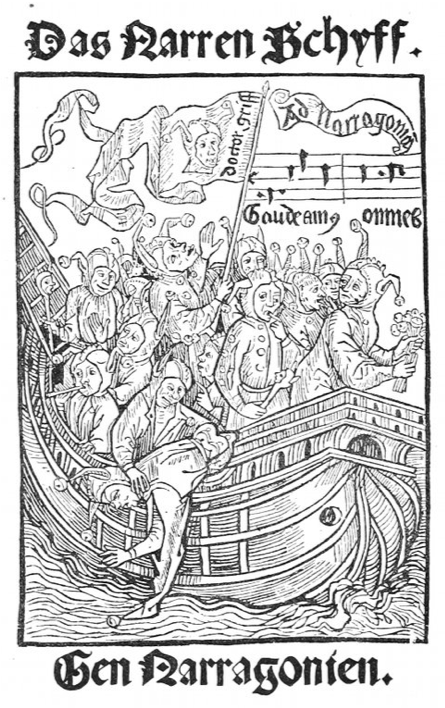
The Ship of Fools is also a clear indication of Brant’s political loyalties. He had become the unofficial panegyrist of the Holy Roman Emperor Maximilian I, who nominated him as an Imperial Councillor in 1502. Brant’s praise of the Emperor can be found in The Ship of Fools at points like this (Poem 56: “Of the End of Power”):
Our Roman Empire trusts in God,
He’s granted it a time and fate,
May He still fashion it so great
That all the world its cause may serve
To such extent that it deserve.
(“Of the End of Power”, 193)
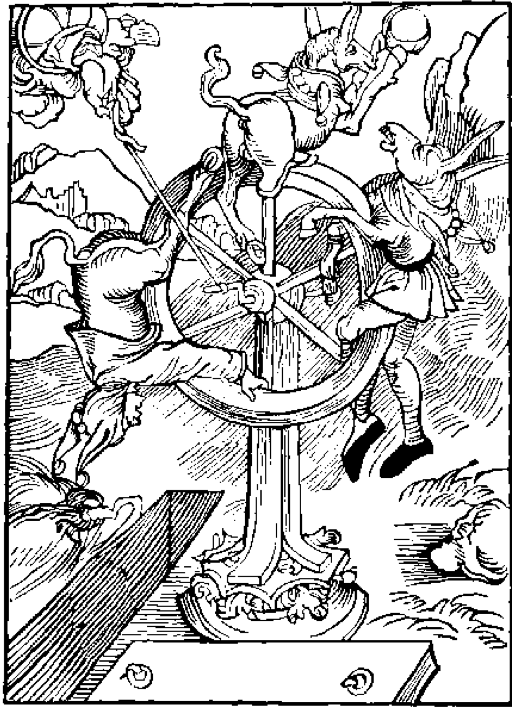
We see, therefore, that The Ship of Fools can be regarded as a seminal text in the development of Renaissance humanism and fifteenth-century Christian thought. Brant’s association with printing-houses in Basel and his prolific poetic output makes him one of the major literary figures of the so-called “Northern Renaissance”. The attribution of at least one-third of the woodcuts of The Ship of Fools to Albrecht Dürer brings in an additional layer of significance, raising the simple woodcuts to the status of the carefully planned work of a master (see Carl Belz). Jacob Locher, Brant’s Latin translator, compared him with Dante in terms of his contribution to the development of Modern High German (as Dante had done to Italian) (Skrine, 176).
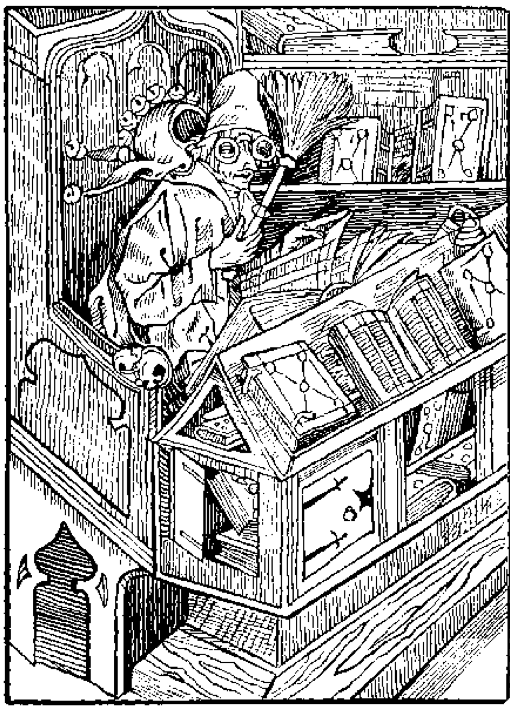
In keeping with Brant’s spirit, we conclude by noting a flash of whimsy—the highly educated Brant, who was one of the most learned Renaissance humanists of his time, began this sequence of poems with a poem titled, “Of Useless Books”, where he declaims:
Yes, I’m the first one here you see.
Because I like my library.
Of splendid books I own no end,
But few I can comprehend;
(“Of Useless Books”, 62)
While Brant’s gibe here is against those who build up libraries for show, we cannot but wonder, in this age of the devaluation and simultaneous commercialization of knowledge, what Brant would have thought of the fools of our times.
Further Reading:
Belz, Carl. “The Illustrations in the Grüninger Edition of the ‘Stultifera Navis’, 1497.” The Princeton University Library Chronicle 23, no. 1 (1961): 16–23. https://doi.org/10.2307/26402690.
Brant, Sebastian. The Ship of Fools. Translated by Edwin H. Zeydel. New York: Dover Publications Inc., 1962.
Classen, Albrecht. “The Symbolic and Metaphorical Role of Ships in Medieval German Literature: A Maritime Vehicle That Transforms the Protagonist.” Mediaevistik 25 (2012): 15–33. http://www.jstor.org/stable/42587425.
Cuttler, Charles D. “Bosch and the Narrenschiff: A Problem in Relationships.” The Art Bulletin 51, no. 3 (1969): 272–76. https://doi.org/10.2307/3048632.
Elhard, K. C. “Reopening the Book on Arcimboldo’s ‘Librarian.’” Libraries & Culture 40, no. 2 (2005): 115–27. http://www.jstor.org/stable/25541905.
Gaier, Ulrich. “Sebastian Brant’s ‘Narrenschiff’ and the Humanists.” PMLA 83, no. 2 (1968): 266–70. https://doi.org/10.2307/1261181.
Nilles, Camilla J. “Re-Reading Folly: Rabelais’s Praise of Triboullet.” Renaissance and Reformation / Renaissance et Réforme 18, no. 1 (1994): 19–31. http://www.jstor.org/stable/43444972.
Pfund, Harry W. Sebastian Brant: The Ship of Fools, by Edwin H. Zeydel. The Journal of English and Germanic Philology 45, no. 4 (1946): 454–56. http://www.jstor.org/stable/27712821.
Rossiter, Kay C. “Bosch and Brant: Images of Folly.” Yale University Art Gallery Bulletin 34, no. 2 (1973): 18–23. http://www.jstor.org/stable/40514148.
Silver, Lawrence A. “Of Beggars: Lucas van Leyden and Sebastian Brant.” Journal of the Warburg and Courtauld Institutes 39 (1976): 253–57. https://doi.org/10.2307/751146.
Skrine, Peter. “The Destination of the Ship of Fools: Religious Allegory in Brant’s ‘Narrenschiff.’” The Modern Language Review 64, no. 3 (1969): 576–96. https://doi.org/10.2307/3722049.
Image Credits:
Wikimedia Commons. Retrieved 30 August 2026.
Yoon, Rangsook. “Navigating Dürer’s Woodcuts for the Ship of Fools,” The Public Domain Review, 25 October 2011. Accessed 30 August 2026, https://publicdomainreview.org/essay/navigating-durers-woodcuts-for-the-ship-of-fools/.
Featured image: By Hieronymus Bosch http://www.hetnoordbrabantsmuseum.nl/english/press-jheronimus-bosch/persbeelden-eng/Previously: www.arthistory.cc : Home : Info : Pic, Public Domain, https://commons.wikimedia.org/w/index.php?curid=8787863